Candidate Rejection Email Generator
Generate professional, empathetic rejection emails for every stage of your hiring process. Protect your employer brand while respecting candidates.
Why Rejection Emails Matter More Than You Think
Most hiring advice focuses on attracting and winning top candidates. But how you treat the people you don't hire shapes your employer brand just as much as how you treat your new hires. A candidate who receives a thoughtful, timely rejection is far more likely to reapply in the future, refer others to your company, and speak positively about their experience. A candidate who hears nothing — or receives a cold, generic dismissal — becomes a vocal detractor. This free generator helps you write rejection emails that are professional, empathetic, and appropriate for each stage of your hiring process.
The Anatomy of a Good Rejection Email
A strong rejection email at any stage shares these qualities:
- →Timely. Sent within days of the decision, not weeks. The longer you wait, the more damaging the silence.
- →Specific enough to feel human. At minimum, reference the role they applied for and use their first name. Generic emails read as form letters — because they are.
- →Respectful of their effort. A candidate who completed three interview rounds deserves a warmer, more personal rejection than someone who submitted a resume and never heard back.
- →Clear and honest. Do not say you will keep their resume unless you actually will. Do not offer vague hope if the decision is final.
- →Forward-looking. Wish them well in their search. For strong candidates, invite them to apply to future roles or follow your company's page.
How to Use This Tool
- 1Select the hiring stage. Choose whether you are rejecting after application review, phone screen, or a full interview process — the tone and content should differ for each.
- 2Fill in candidate and role details. Add the candidate's name, the role they applied for, and any optional personalization like a specific positive note about their application.
- 3Copy and send. Use the generated email as-is or adjust the language to better match your company's voice before sending.
Tips for Handling Rejections at Scale
- →Segment by stage. Maintain at least three rejection templates: one for resume review, one for phone screen, and one for post-interview. Each stage deserves a different level of warmth and specificity.
- →Use your ATS to trigger rejections promptly. Most applicant tracking systems allow you to automate stage-based rejections so no candidate falls through the cracks.
- →Train interviewers on rejection timing. Ensure that hiring managers submit their decisions quickly — slow internal decisions are the root cause of delayed rejections.
- →For final-round candidates, consider a call. A brief phone call before sending a written rejection is a meaningful step that distinguishes your company from the majority of employers.
- →Track your candidate experience NPS. Consider sending a short survey to rejected candidates asking about their experience. The feedback is invaluable for improving your process.
Automate candidate communication without losing the human touch. JuggleHire — the recruitment CRM for permanent-placement agencies — sends timely, professional emails at every stage, from application receipt to rejection to offer. Start free →
Frequently Asked Questions
Is this candidate rejection email generator free?
Yes, completely free. No account or credit card required.
Why does a rejection email matter?
Every candidate who applies to your company forms an impression of your brand — not just the ones you hire. Research shows that candidates who have a poor rejection experience share it publicly (on Glassdoor, LinkedIn, and word of mouth). A well-written rejection email preserves your employer brand, keeps the door open for future opportunities, and treats candidates with the respect they deserve for investing their time.
Should you give feedback in a rejection email?
For early-stage rejections (application screening), specific feedback is not expected and is impractical at scale. For candidates who reached the interview stage — especially final rounds — brief, constructive feedback is appreciated and builds goodwill. Keep it factual, avoid language that could create legal liability, and focus on the fit rather than personal criticism.
When should you send a rejection email?
The earlier the better. Candidates should be notified as soon as a decision is made — not weeks after. For application-stage rejections, aim within 5–7 business days. For candidates who completed interviews, notify them within 24–48 hours of the decision. Leaving candidates in limbo is one of the most damaging things you can do to your employer brand.
What should you say (and not say) in a rejection email?
Do say: thank the candidate for their time, acknowledge the role they applied for, communicate that you have moved forward with another candidate, and wish them well. Do not say: vague phrases like "we will keep your resume on file" if you will not, anything that implies discrimination, or specific reasons that could be disputed or create legal exposure.
How do you personalize rejection emails at scale?
Use mail merge fields (first name, role title) in your ATS or email tool to personalize the key elements without writing each email from scratch. Segment your rejection templates by stage — application, phone screen, and final round — and use a slightly warmer, more personalized tone for candidates who got further in the process.
Is a phone call or email better for rejection?
For early-stage applicants who only submitted a resume, email is the standard and appropriate channel. For candidates who reached the final interview round or had a long process, a phone call followed by a written email is considered best practice. It shows respect for the time they invested and allows them to ask clarifying questions.
What if a candidate asks for more detailed feedback after rejection?
This is a reasonable request, especially from candidates who made it to later stages. If you can offer it, a 15-minute feedback call is a meaningful gesture that builds long-term goodwill. If capacity does not allow this, a brief written summary (2–3 sentences) focusing on fit rather than deficiencies is a professional alternative. Always keep feedback constructive and factual.
Free download
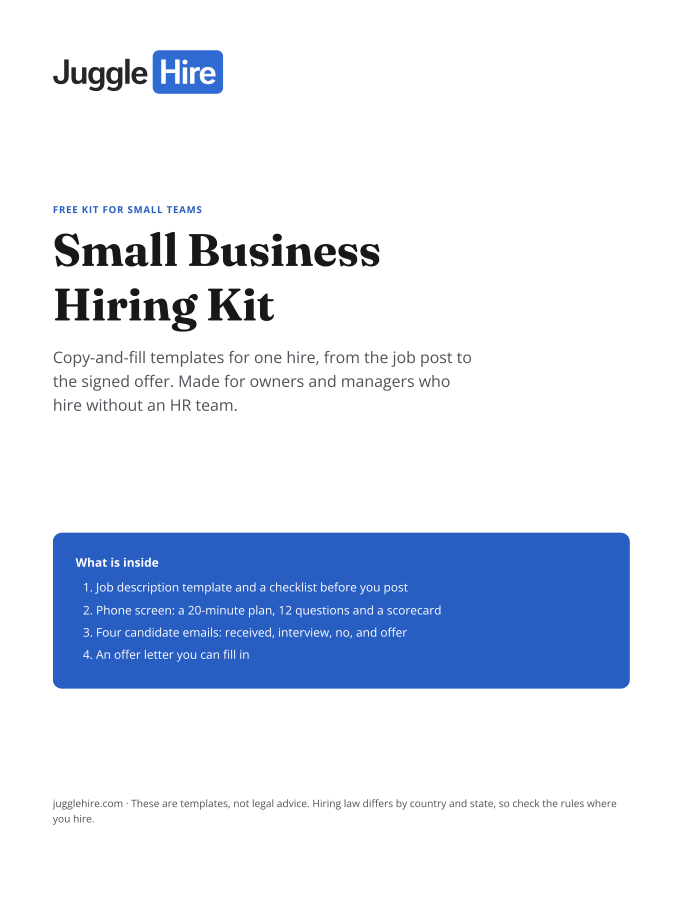
Get the Small Business Hiring Kit
- Job description template and a checklist before you post
- 20-minute phone screen: 12 questions and a scorecard
- Four candidate emails: received, interview, no, and offer
- An offer letter you can fill in
Free. We email you the kit and three short hiring tips. Unsubscribe any time.