Jeff Bezos and Amazon have been at the forefront of global business, consistently grabbing headlines for their monumental achievements.
Amazon has reached the height of becoming a trillion dollar company.
Amazon's journey to being a trillion-dollar company and its successful forays into sectors like cloud computing, artificial intelligence, and streaming services showcase its capability to dominate diverse markets.
The backbone of Amazon’s sustained success is its innovative recruitment strategy, meticulously crafted under Jeff Bezos’ guidance. This strategic approach focuses on attracting, hiring, and retaining top talent — a core element of any talent acquisition strategy — which is crucial for driving the company’s innovation and growth.
In this article, we explore the hiring lessons from Jeff Bezos and Amazon. We'll see the recruitment strategies to understand how Amazon consistently manages to stay ahead in the highly competitive tech industry.
#How Amazon Recruits
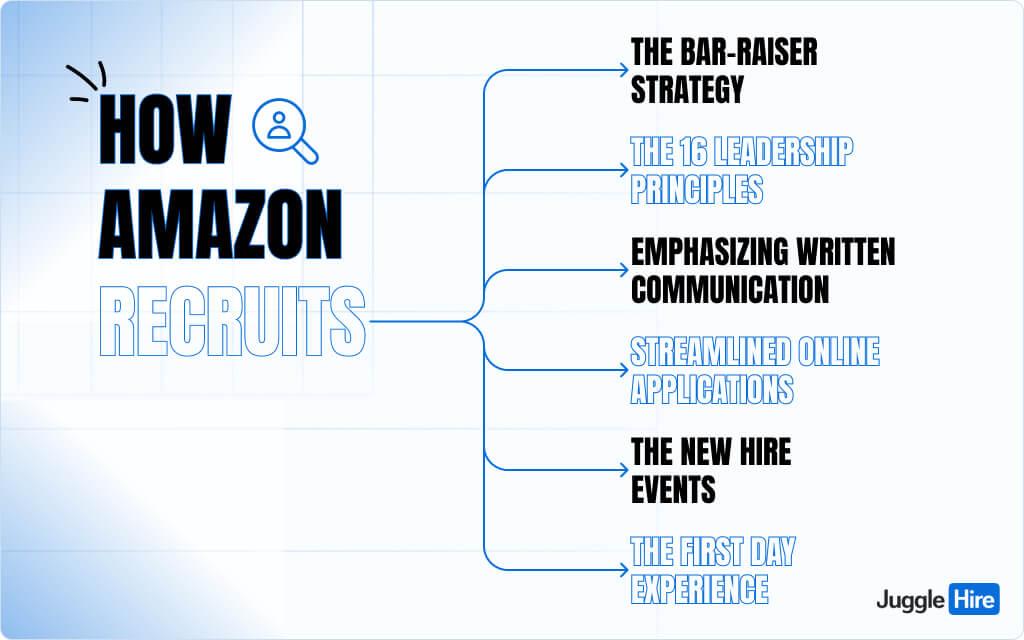
Amazon stands out due to its unique hiring strategies, which are structured to ensure that only the best talent joins the team. Below are some key strategies and recruiters' tips Amazon uses:
#Lesson 1: The Bar-Raiser Strategy
At Amazon, the hiring process is stringent, featuring a special role known as the "bar raiser." This person is not part of the hiring team and has no direct interest in filling the position quickly. Instead, their role is critical: they have the power to veto any candidate who does not meet Amazon's high standards.
The bar raiser ensures that every new hire not only meets the required standards but also elevates the existing team's performance and culture. This strategy is crucial for Amazon as it helps to maintain high quality, avoid common HR mistakes, and promote a culture of excellence.
#The 16 Leadership Principles
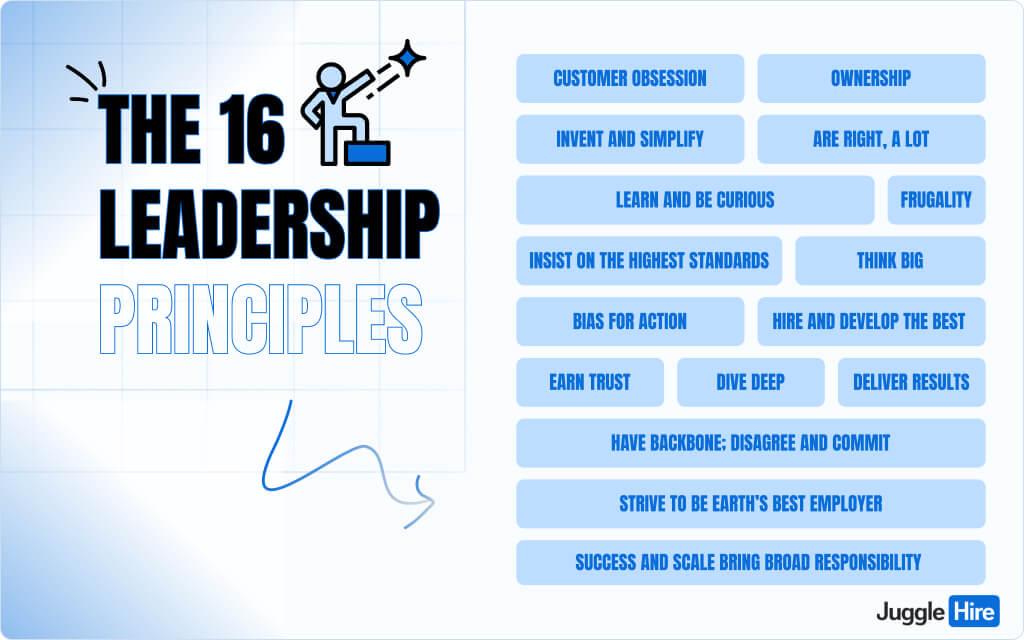
Amazon evaluates potential hires based on their alignment with the company's 16 leadership principles. These principles are central to every decision made within the company and include values such as customer obsession, ownership, and innovation. Here are the 16 principles:
-
Customer Obsession - Leaders start with the customer and work backward. They work to earn and keep customer trust.
-
Ownership - Leaders act on behalf of the entire company, beyond just their own team.
-
Invent and Simplify - Leaders expect and require innovation and invention from their teams and always find ways to simplify.
-
Are Right, A Lot - Leaders are right a lot. They have strong judgment and good instincts.
-
Learn and Be Curious - Leaders are never done learning and always seek to improve themselves.
-
Hire and Develop the Best - Leaders raise the performance bar with every hire and promotion.
-
Insist on the Highest Standards - Leaders have relentlessly high standards and continuously raise the bar.
-
Think Big - Thinking small is a self-fulfilling prophecy, but thinking big invites bold bets.
-
Bias for Action - Speed matters in business. Many decisions are reversible and do not need extensive study.
-
Frugality - Accomplish more with less. Constraints breed resourcefulness, self-sufficiency, and invention.
-
Earn Trust - Leaders listen attentively, speak candidly, and treat others respectfully.
-
Dive Deep - Leaders operate at all levels, stay connected to the details, and audit frequently.
-
Have Backbone; Disagree and Commit - Leaders respectfully challenge decisions when they disagree, even when doing so is uncomfortable.
-
Deliver Results - Leaders focus on the key inputs for their business and deliver them with the right quality and in a timely fashion.
-
Strive to be Earth’s Best Employer - Leaders work every day to create a safer, more productive, higher performing, more diverse, and more just work environment.
-
Success and Scale Bring Broad Responsibility - Leaders understand that their decisions have a significant impact, and they act accordingly.
Candidates must demonstrate these traits in various ways throughout the hiring process. For instance, the principle of "learn and be curious" might be assessed by asking candidates about their recent learning experiences or how they've handled past challenges innovatively.
These principles are a part of the hiring lessons from Jeff Bezos and Amazon. These ensure that the candidates are not only skilled but are also a good fit for Amazon's distinctive culture.
#Lesson 2: Emphasizing Written Communication
Amazon places high value on clear and concise communication. This is evident from its recruitment process, which requires candidates to submit written responses to behavioral questions before interviews. This is one of the recruiters' tips that allows interviewers to evaluate candidates' writing skills and their ability to think critically and logically.
Internally, Amazon favors written narratives over PowerPoint presentations for meetings. Jeff Bezos advocates for this approach, believing that writing encourages deeper thinking and clearer understanding. This focus on written communication helps Amazon minimize misunderstandings and foster creative problem-solving.
#Lesson 3: Streamlined Online Applications
Amazon has streamlined the application process, particularly for hourly roles, by eliminating the need for resumes. Unlike companies still relying on Google Forms for job applications, Amazon built a purpose-built system where candidates can apply by simply entering some personal information and selecting their preferred shifts through an online form, which typically takes about 15 minutes to complete.
This approach not only simplifies the application process but also helps Amazon attract a large and diverse pool of applicants, ensuring a smoother and more efficient hiring workflow. For most companies, automating the recruitment process with an ATS achieves a similar result.
#Lesson 4: The New Hire Events
After candidates complete their online applications, they are invited to a 30-minute New Hire Event. At this event, candidates must provide proof of their identity and eligibility to work.
The event includes more detailed information about the job, a drug test, and document verification. These New Hire Events are crucial for Amazon to ensure all new hires comply with legal requirements and are ready to start work safely and effectively.
#Lesson 5: The First Day Experience
Amazon's first day for new hires is designed to integrate them thoroughly into their new roles. On this day, new employees dive into their job details and learn crucial safety protocols. They also receive training on the equipment and tools essential for their positions.
This initial orientation is key to preparing new hires for their tasks, ensuring their safety, and making them feel welcomed into the Amazon family. This comprehensive onboarding process sets the stage for successful integration and long-term contribution to the team.
Also Read: Remote Hiring Tips: How To Attract, Hire and Retain Remote Employees
#Hiring Strategy Checklist: Dos & Don'ts
Amazon's hiring strategies provide valuable lessons for recruiters. These strategies are provided in the recruiters' tips from Jeff Bezos and Amazon. Here’s a simple checklist of dos and don'ts based on these practices:
#Dos
- Focus on Culture Fit
Jeff Bezos values culture fit highly. He once mentioned that he would rather conduct 50 interviews and hire no one than hire the wrong person. This shows his commitment to maintaining a strong, cohesive team.
Hiring someone who doesn’t align with the company’s culture can harm team performance and morale. Recruiters should seek candidates who share the company’s vision and values and can positively impact the work environment. Building a strong employer brand helps attract candidates who are already aligned with your culture.
- Assess Skills and Potential
At Amazon, hiring decisions go beyond resumes and credentials. Bezos prefers to evaluate candidates through practical tests like case studies, simulations, or role plays.
He looks for individuals with a growth mindset — those eager to learn and adapt. Recruiters should design their processes to assess not just candidates' knowledge but their ability to apply skills and grow within the company. Structured interview techniques and well-crafted screening questions can help evaluate this effectively.
#Don'ts
- Never Compromise on Quality
Jeff Bezos is known for his stringent hiring criteria. Amazon prioritizes candidates who are intelligent, passionate, and driven. Recruiters should not compromise their standards just to fill a position quickly. It's crucial to strive for the highest quality in hires, even if the process takes more time or resources.
- Avoid Decisions Based on Intuition or Bias
Bezos advocates using data and evidence to back hiring decisions. He warns against common biases like the halo effect, confirmation bias, or anchoring bias, which can distort perceptions of a candidate.
Recruiters should use objective methods to assess candidates. This can include structured interviews, assessments, and scoring rubrics to ensure fair and accurate evaluations.
#Enhancing Your Recruitment with ATS

In addition to Amazon's hiring strategies, recruiters can enhance their recruitment process by using an Applicant Tracking System (ATS). An ATS simplifies many hiring tasks. It helps you post job openings, screen resumes, schedule interviews, provide feedback, and create reports—all in one place.
Using an ATS like JuggleHire can save recruiters time, minimize mistakes, and improve overall efficiency. This tool allows you to manage your recruitment activities more effectively and provides insights to refine your hiring strategies.
By integrating an ATS into your recruitment process, you can ensure a smoother, more successful hiring experience.
#Hiring Lessons from Jeff Bezos and Amazon: Wrapping Up
Amazon's exceptional approach to recruitment, shaped by Jeff Bezos' visionary leadership, is a cornerstone of its global success.
From the hiring lessons from Jeff Bezos and Amazon, we can see that by meticulously selecting candidates who align with its ambitious vision and innovative culture, Amazon continues to lead and expand in the tech industry.
Understanding and applying these recruitment strategies, inspired by Bezos, can provide valuable lessons for any organization aiming to enhance its hiring process and secure the best talent.
#FAQs on Hiring Lessons from Jeff Bezos and Amazon
#What is Amazon's bar raiser method?
The bar raiser is an independent interviewer with veto power who ensures every new hire raises the average quality of the team. This person has no stake in filling the role quickly, so their focus is entirely on maintaining Amazon's hiring standards and avoiding common HR mistakes.
#How does Amazon evaluate candidates?
Amazon evaluates candidates against its 16 leadership principles using behavioral interview questions. Candidates must demonstrate traits like customer obsession, ownership, and bias for action through real examples. Using structured interview techniques is key to this approach.
#Can small businesses apply Amazon's hiring strategies?
Absolutely. While you may not need a formal bar raiser, you can designate an impartial interviewer on your team. Using an applicant tracking system like JuggleHire helps small businesses implement structured hiring processes without Amazon-scale resources.
#How can I measure hiring quality like Amazon does?
Track recruitment KPIs such as quality of hire, time-to-hire, and new hire retention rate. Tools like a time-to-hire calculator help you benchmark your process and identify bottlenecks.
#What is the biggest mistake recruiters make according to Jeff Bezos?
Bezos warns against making hiring decisions based on intuition or bias. Confirmation bias, halo effect, and anchoring bias can all distort candidate evaluation. Using data-driven tools like AI recruitment software and standardized scorecards helps eliminate these biases.
#Why does Amazon prioritize written communication in hiring?
Written narratives force clearer, deeper thinking than slide presentations. By requiring written responses before interviews, Amazon evaluates candidates' ability to think critically and communicate precisely — skills that are difficult to assess through resumes alone.
#Related Resources
- Best Applicant Tracking Systems for Small Businesses — Implement structured hiring processes at any company size
- Interview Tips for Hiring Managers — Conduct better behavioral interviews like Amazon
- How to Automate Your Recruitment Process — Streamline applications and screening like top companies
- Employee Retention Strategies — Keep the talent you worked hard to hire
- Top Recruiting Software — Compare the best tools for modern recruiters
- How to Build a Strong Employer Brand — Attract candidates who align with your company culture
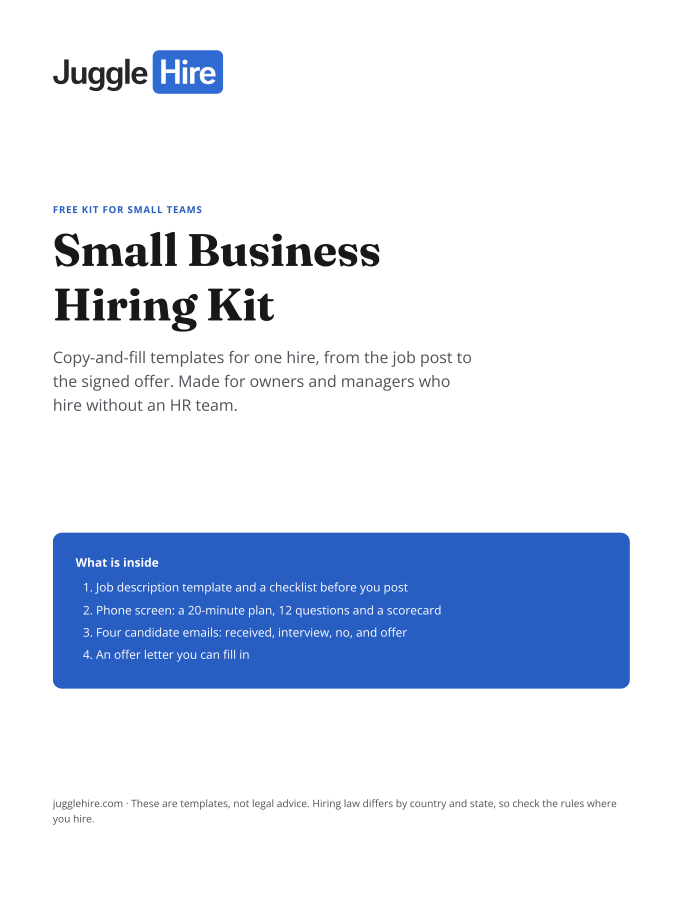
Free download
Get the Small Business Hiring Kit
- Job description template and a checklist before you post
- 20-minute phone screen: 12 questions and a scorecard
- Four candidate emails: received, interview, no, and offer
- An offer letter you can fill in
Free. We email you the kit and three short hiring tips. Unsubscribe any time.
Tagged with:

Zakir Hossen
Zakir, founder of JuggleHire - a Google Forms alternative for hiring. Bootstrapped entrepreneur and software engineer with 10+ years coding experience from BD.
Related Posts
Candidate Experience Tools to Improve Your Hiring Journey
The best candidate experience tools for 2026. Improve every touchpoint of the applicant journey, from careers page to offer.
candidate experience toolscandidate experience softwareapplicant experience+5 more
Read more
8 Proven Hiring Strategies for Small Businesses in 2026
Discover 8 proven hiring strategies for small businesses to compete with larger companies.
hiring strategiessmall business hiringrecruitment tips+5 more
Read more